NCV Nerve Conduction Velocity
Nerve conduction measurements help assess how quickly and effectively electrical signals travel through the nerves.
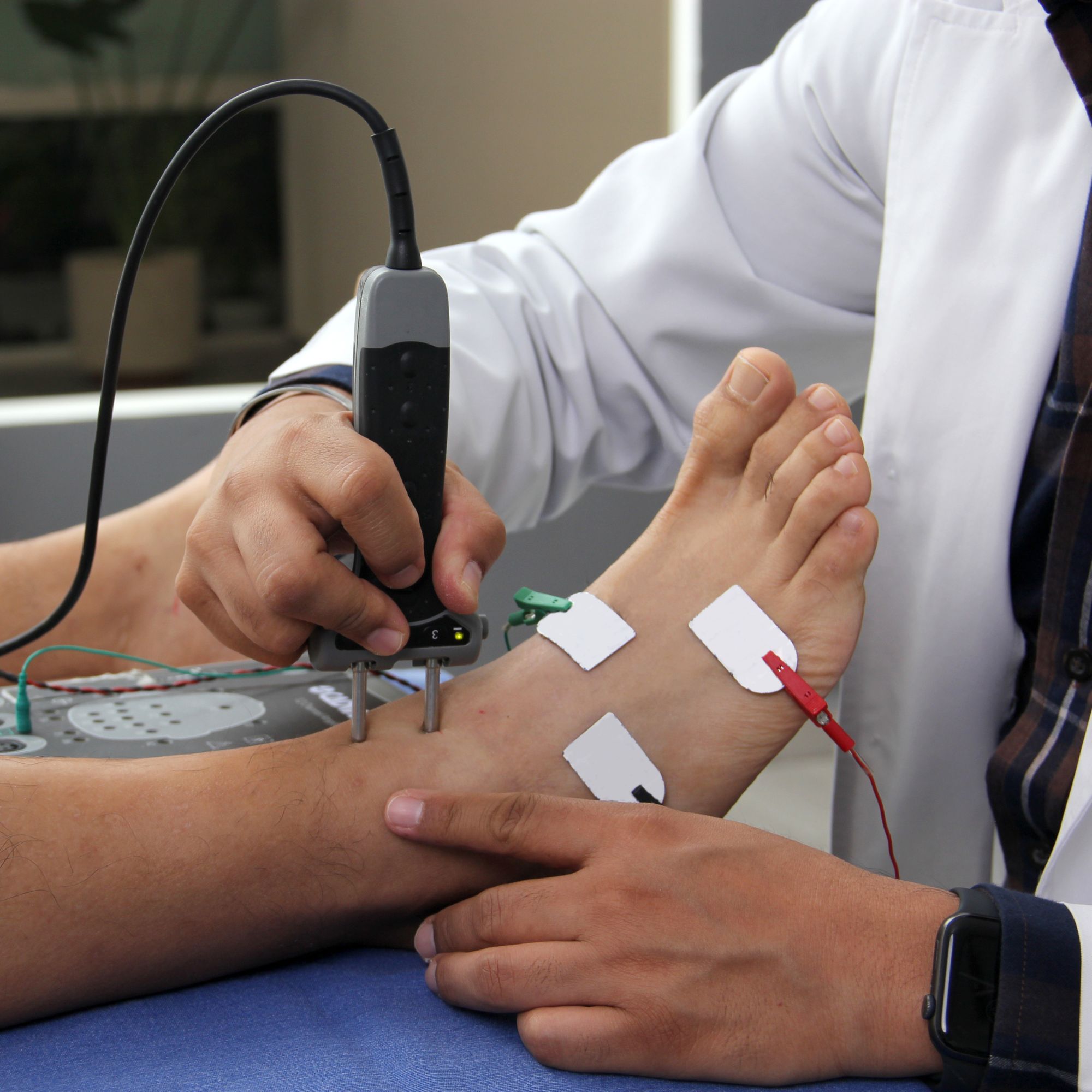
What is an NCV study?
A nerve conduction velocity study, also called a nerve conduction study or NCS, is a diagnostic test used to evaluate the function of peripheral nerves. These are the nerves that carry messages between the brain, spinal cord, muscles and the rest of the body.
During the test, small electrodes are placed on the skin. A brief, controlled electrical impulse stimulates the nerve while other electrodes record the nerve's response. The speed and strength of that response provide useful information about nerve function.
NCV studies are often performed together with electromyography (EMG), depending on the referring practitioner's request and the symptoms being investigated.
Conditions and symptoms assessed
Your doctor may refer you for an NCV study when symptoms suggest that a nerve may be compressed, irritated, damaged or not transmitting signals normally.
Numbness or tingling
Persistent pins and needles, altered sensation or reduced feeling in the hands, arms, feet or legs.
Weakness
Unexplained muscle weakness, reduced grip strength or difficulty with everyday movement.
Nerve compression
Assessment of suspected carpal tunnel syndrome and other sites of nerve entrapment.
Peripheral neuropathy
Investigation of nerve dysfunction that may affect multiple nerves, often beginning in the feet or hands.
Nerve injury
Evaluation after trauma or when the location and severity of possible nerve damage need clarification.
Pain or burning
Symptoms that may follow the path of a nerve or occur together with weakness and sensory changes.
What to expect
Electrodes are positioned
Small recording and stimulating electrodes are placed on the skin over the nerves being examined.
The nerve is stimulated
A brief electrical pulse is delivered. You may feel a quick tapping, tingling or twitching sensation.
Responses are measured
The equipment records how fast and how strongly the nerve responds. Several nerves may be tested for comparison.
How to prepare for an NCV study
On the day of your test
- Wear comfortable, loose-fitting clothing that allows access to the area being tested.
- Keep your skin clean and dry.
- Do not apply body lotion, oils or creams to the arms or legs on the day of the study.
- Bring your referral letter and any relevant medical information.
Please tell us beforehand
- If you have a pacemaker, implanted defibrillator or another implanted electronic device.
- If you take blood-thinning medication, particularly if an EMG may also be performed.
- If you have a bleeding disorder or any skin infection near the area being examined.
- If you have questions or concerns about the procedure.
Results and next steps
The measurements are reviewed and interpreted in the context of your symptoms and referral. A report is then provided to the referring healthcare practitioner, who will discuss the findings and any appropriate next steps with you.
Results should always be considered together with your medical history, clinical examination and any other relevant investigations.
Need an NCV assessment?
Contact Eugene Marais Neurophysiology Inc. to request an appointment or ask for more information about your referral.